Qualitative Lead(s)
Dr Sharli Paphitis
Project Lead & Team
Dr Sharli Anne Paphitis, King’s College London – PI
Prof Catriona Ida Macleod, Rhodes University
Dr Lindsay Kelland, Rhodes University
Dr Ryan Du Toit, Rhodes University
Project Dates
2013–2017
Funding Source(s)
Circle of Sisterhood
Qualitative Design used
- Participatory and Creative Research
- Evaluating Services and Interventions
- Developing and Adapting Interventions
Field of Research
Menstrual health; stigma and taboo; girls’ education; gender and health; community engagement; social entrepreneurship; critical health education; reproductive justice
Geographic/Contextual Setting
Eastern Cape Province, South Africa
The Siyahluma Project used a community-engaged research design to understand and address menstruation‑related challenges faced by school‑going girls and women. The project combined school‑based research with co‑created health education interventions, a community theatre initiative, and a women‑led social enterprise to reduce stigma, build local capacity, and improve access to reliable menstrual products and non‑stigmatised information.
Qualitative Approach and Methods
Aim of the qualitative component
To generate contextually grounded evidence about menstruation‑related challenges (stigma, knowledge gaps, school practices, and material constraints) and to co‑create practical community‑based responses—particularly critical health education interventions and partner‑led delivery models—that could shift taboo cultures and improve girls’ experiences in schools.
Qualitative methodology
Engaged research (community‑based participatory approaches) informed by critical health psychology/critical health education and relational research ethics, with explicit attention to power, positionality, and iterative consent.
Which qualitative methods were used?
- Community‑engaged partnership building with local NGOs and schools
- Co‑design and iterative refinement of school‑based health education sessions embedded within existing Life Skills programming (co‑ed dialogue spaces)
- Participatory and creative methods via a community theatre intervention (school drama students devising and performing work on menstruation stigma/taboos)
- Documentary/material development (information leaflets; session exercises; kit demonstration guidance)
- Embedded feedback loops with “champion teachers” who tracked distribution and collected girls’ experiences for the project team
Related mixed‑methods evidence component (linked to Siyahluma): large‑scale school survey work informing the project’s understanding of structural and social barriers.
Sampling & recruitment
Partnership‑mediated recruitment through schools and NGO programmes. In the survey component linked to Siyahluma, learners were recruited through multi‑stage sampling: stratified random sampling of schools and purposive sampling of Grade 11 female‑identified learners in Eastern Cape districts. Intervention work was delivered through existing school structures (Life Skills programme) and school‑based drama participation, enabling inclusion of both girls and boys in co‑educational dialogue settings.
Data analysis: how the team made sense of the data
Evidence and learning were generated through an iterative “research‑to‑action” cycle: survey and field insights shaped the intervention focus; NGO facilitators and teachers fed back what worked, what was requested (e.g., demand for take‑home materials), and what needed adaptation; and the team adjusted content and delivery accordingly. Reflective and relational ethical practice was central e.g., decisions about researcher presence/absence in sensitive sessions were made collaboratively with facilitators to reduce power effects.
Findings, Learning & Impact
Summary of main findings
The project highlights pervasive menstruation stigma, myths and taboo cultures; significant gaps in reliable, non‑stigmatised information; and school contexts in which girls may feel silenced or unsafe discussing or managing menstruation. The linked Eastern Cape survey work highlights how both structural factors (sanitation/safety) and social factors (stigma/participation restrictions) interact to shape schooling experiences.
Why were qualitative methods used in this project, and what did they enable?
The project created dialogue infrastructures (co‑ed Life Skills sessions; theatre‑based public engagement) that helped shift taboo cultures, while also producing practical artefacts (exercises, leaflets, kit‑use demonstrations) that could travel across schools via partner facilitators and teachers.
Impact & influence
School/community practice: Strengthened local capacity to deliver menstruation education through trained NGO facilitators and partner teachers; created shared resources (handouts/materials) that could be taken home.
Stigma reduction: Public and school‑based dialogue spaces (Life Skills, theatre) targeted taboos and myths and normalised discussion across genders.
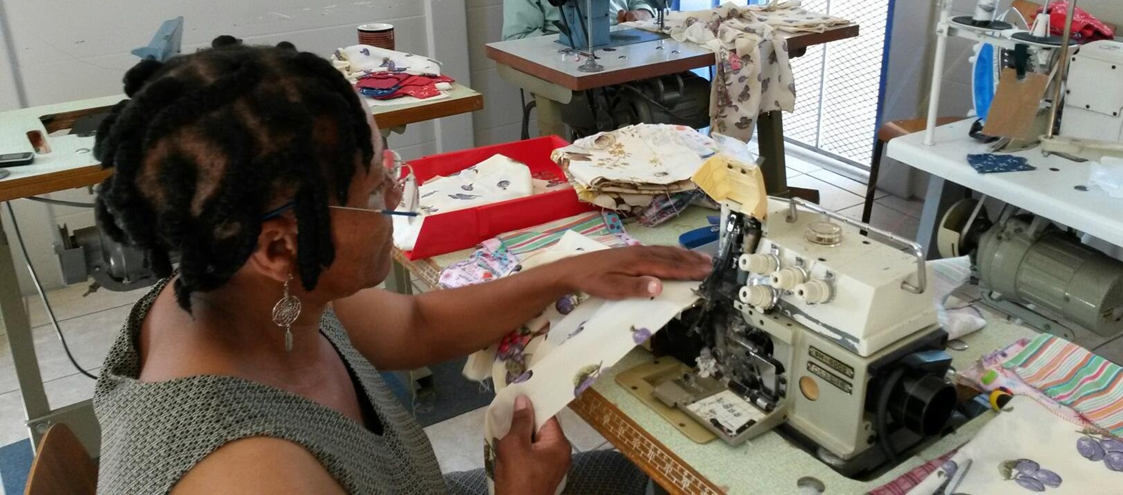
Economic/community development: Established and supported a women‑led enterprise producing re‑usable menstrual products, including training in sewing and business skills and mentorship via MBA partnerships.
Methodological contribution: Provides a richly documented case of ethical and epistemic complexity in engaged research—useful for training and guidance on relational ethics, iterative consent, and researcher positionality in community‑based intervention work.
Links, Outputs & Resources
Links to publications
- Kelland, L., Paphitis, S., & Macleod, C. (2017). A contemporary phenomenology of menstruation: Understanding the body in situation and as situation in public health interventions to address menstruation-related challenges. Women’s Studies International Forum, 63, 33–41. Available here.
- Paphitis, S. A. (2018). The possibility of addressing epistemic injustice through engaged research practice: Reflections on a menstruation related critical health education project in South Africa. Critical Public Health, 28(3), 363–372. Available here.
- Macleod, C. I., Du, T. R., Paphitis, S., & Kelland, L. (2020). Social and structural barriers related to menstruation across diverse schools in the Eastern Cape. South African Journal of Education, 40(3), 1–9. Available here.
- Paphitis, S. A., & Kelland, L. (2018). In the Red: Between Research, Activism, and Community Development in a Menstruation Public Health Intervention. In C. I. Macleod, J. Marx, P. Mnyaka, & G. J. Treharne (Eds), The Palgrave Handbook of Ethics in Critical Research (pp. 195–209). Springer International Publishing. Available here.
- Macleod, C. I., Glover, J. M., Makuse, M., Kelland, L., & Paphitis, S. A. (2023). Male Peer Talk About Menstruation: Discursively Bolstering Hegemonic Masculinities Among Young Men in South Africa. Women’s Reproductive Health, 10(1), 6–23. Available here.