
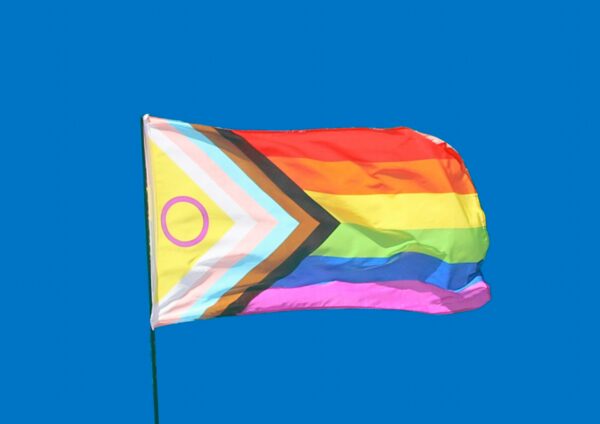
a progress pride flag flying in a bright blue sky
The Qualitative Open Mic Podcast

Kai Syng Tan and Georgia Thom on creative practice

Qualitative researchers are increasingly turning to creative methods and methodologies to expand perspectives on health, healthcare, and divergent ways of being. In this episode Sohail speaks to Kai Syng Tan and Georgia Thom, both practising artists and researchers, about how neurodivergence and art work together to explore marginalised experiences of the world including trans life, neurodivergence, and their intersections, amid the resurgence of the far right.


Listen now
phone with speech bubbles on a yellow background
The Qualitative Open Mic Podcast

Alyssa Hillary Zisk on Augmentative and Alternative Communication

Autistic people have a whole constellation of communication needs and styles, but these are not always understood or accommodated by researchers. This month, Sohail interviews Alyssa Hillary Zisk about Augmentative and Alternative Communication (AAC): what it is, the range of communication profiles it can help accommodate, and how qualitative inquiry into autistic experiences helped name these to increase understanding.

Listen now
Wooden scrabble blocks for the whole alphabet placed in a square
The Qualitative Open Mic Podcast

Daria Khanolainen on dyslexia and self-esteem

Neurodiversity and neurodivergence have been revolutionary ideas in autism research, and later in ADHD. But how do they apply to other diagnoses or experiences? This month Sohail speaks to Dr Daria Khanolainen, a dyslexia researcher in Finland, about qualitative dyslexia research, self-esteem, and pathologising reading difficulties.

Listen now
Small child playing with an abacus
The Qualitative Open Mic Podcast

Victoria Castle on participatory research and neuroinclusive parenting measures

Parents get a lot of advice, and a lot of it is conflicting or inappropriate. Parenting research aims to be better than that – but is it, when neurodivergence is in the mix? Sohail speaks to Dr Victoria Castle about her participatory research using innovative qualitative methods to co-develop ways to measure parenting that work for neurodivergent parents and parents of neurodivergent children.

Listen now
A magnifying glass held up to an autumnal forest
The Qualitative Open Mic Podcast

Elizabeth Hauke on neurodivergent autoethnography and inclusive education

Autoethnographers use their personal experiences to explore wider issues, relationships, or situations. So what happens if you experience the world differently? Sohail speaks to Dr Elizabeth Hauke about autoethnography, inclusive education and assessment, and denormativising the university.

Listen now
White theatrical mask on a pale background
The Qualitative Open Mic Podcast

Hannah Belcher on (un)masking and mental health research

Where does neurodiversity sit in relation to broader movements for lived experience led research? Sohail and Dr Hannah Belcher of the Service User Research Enterprise discuss the example of autistic masking and its relationship to mental health.

Listen now
A globe picked out in connected points of light across it
The Qualitative Open Mic Podcast

Morénike Giwa Onaiwu on antiracist advocacy

Has qualitative research been complacent about its ability to highlight marginalised perspectives? Sohail speaks to Dr Morénike Giwa Onaiwu about forthcoming anthology “Neurodiversity en Noir” and platforming Black neurodivergent voices.

Listen now
A rainbow umbrella photographed from below
The Qualitative Open Mic Podcast

Monique Botha on funding priorities and community justice

This month, Sohail interviews Dr Monique Botha about funding and priority setting, citational justice, emotion in research, and why letting community-led neurodivergence research out of its silo would benefit neurotypical and neurodivergent populations alike.

Listen now
A necklace in the shape of the infinity symbol made out of tentacles, held in someones hand
The Qualitative Open Mic Podcast

Damian Milton on double empathy and autistic worlds

How have mainstream theories of autism missed the mark by failing to qualitatively explore internal autistic worlds? Sohail speaks to legend among autistic autism researchers Dr Damian Milton about the double empathy problem and its broader implications for neurodivergent and neurotypical-led research.

Listen now
White Stacked Worksheets on Table
The Qualitative Open Mic Podcast

Johnny Saldaña on blue collar qualitative research

In an academic landscape dominated by formality and jargon, Johnny Saldaña brings a refreshingly raw perspective with his ideas on ‘Blue Collar Qualitative Research’. We speak to him about how to challenge the ivory towers of academia. We also explore his ‘kick-ass’ article that tackles positionality, voice, ethics, and many other foundational aspects of qualitative research. Saldaña’s unfiltered perspective invites listeners to reflect on the power dynamics that shape our academic voice.

Listen now
A zoomed out image of crowded boats on the ocean
The Qualitative Open Mic Podcast

Hyab Yohannes and Tesfalem Yemane on refugee-led scholarship

Why are there limited voices from sanctuary seekers in qualitative research about migrant health? Tesfalem Yemane and Hyab Yohannes bring a vital perspective on ‘refugee-led scholarship’, dissecting the challenges and significance of broadening the scholarly space to include those who have first-hand experience seeking sanctuary. They discuss how dominant political agendas and interests influence the kind of questions we’re able to ask around migration and mental health, as well as how we might be able to ask them.

Listen now
post its pinned to a board
The Qualitative Open Mic Podcast

Amy Wells on challenging tokenistic involvement

The involvement of service users in research holds transformative potential, but what happens when it becomes mere tokenism? When is it better to step away? With insights from the National Survivor User Network, we discuss the critical line between genuine engagement and superficial involvement, seeking ways to ensure research remains grounded, relevant, and truly collaborative.

Listen now