Cartoon image with three figures, a calendar, a timer, a to-do list, and a plant
RSS Ethics

Participatory Research Ethics Surgery: communicating lived experience roles in research

Why contracts often reproduce hierarchy rather than protect lived experienced collaborators. We look at co-researcher contracts, university assumptions of “vulnerability” around mental health and lived experience, IP clauses, liability, and when refusing a contract is the ethical choice.
Book now
Colourful picture of squares with different coloured heads in
Qualitative Special Interest Group

QSIG Midday Talk: Projection of low self concept in person-drawing

Drawing on Dr Amna Zaqout’s research with children, this session uses children’s drawings as an example to demonstrate how visual expression can offer insight into children’s inner worlds, particularly in relation to self-concept and emotional experience.
Book now
Cartoon image with three figures, a calendar, a timer, a to-do list, and a plant
RSS Ethics

Participatory Research Ethics Surgery: payment and reimbursement in participatory research

This session tackles university rules around “incentives” and payments, fair compensation, undocumented participants and people on benefits, and why universities routinely block ethical payment.

Book now
Colourful picture of squares with different coloured heads in
Qualitative Special Interest Group

QSIG Midday Talk: Getting school children talking about brain health

Fola Afolabi and Kritika Samsi present a 6-month project that focused on developing, recruiting, and training Youth Brain Health Champions from amongst school children in south London.

Book now
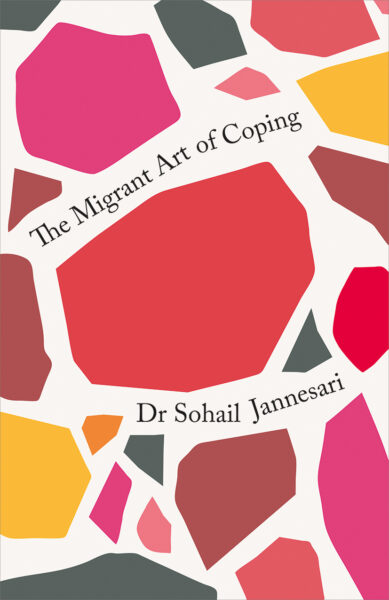
the migrant art of coping cover art
Other events

Book launch: The Migrant Art of Coping

Join us for an interactive book launch and wellbeing workshop with Dr Sohail Jannesari, QUAHRC Methods Engagement & Innovation Lead, to celebrate the release of his new book The Migrant Art of Coping (Pluto Press, 2026).

More info
Colourful picture of squares with different coloured heads in
Qualitative Special Interest Group

QSIG Midday Talk: Using prediction models in mental health care

In recent years, clinical prediction models (CPMs) have emerged as an avenue for risk stratification and the provision of highly individualised care, through careful consideration of differences across individuals’ characteristics, genes, environments, and lifestyles. In psychiatry, whilst many CPMs have shown promise in improving care, few have actualised their potential and been implemented for routine usage in clinical practice as in certain branches of medicine (e.g., cardiovascular disease and cancer).

More info
Colourful picture of squares with different coloured heads in
Qualitative Special Interest Group

QSIG Midday Talk: How do discourses travel?

With Jo Law. This presentation shares the methodological design of her PhD, which explores working-class motherhood. It will explain why she chose a multi-level discourse framework, how she conceptualised each level and how she is working across micro, meso, and macro levels in her analysis. Focusing particularly on the meso level, she will draw on staff interviews alongside ethnographic observations in a community centre to explore how working-class motherhood is talked about and lived in everyday interactions.

More info
Cartoon image with three figures, a calendar, a timer, a to-do list, and a plant
RSS Ethics

Participatory Research Ethics Surgery: communicating lived experience roles in research

People with lived experience are increasingly involved in (mental health) research as advisors, co-researchers and authors. This session will explore how lived experience (LE) roles are defined and described in ethics applications and funding applications, including who is considered a participant, what LE members are expected to do, and what responsibilities people can hold within projects.

More info
A paint rainbow
QUAHRC Seminar Series

Rethinking Power in Autism Research: Intersectional, Participatory, and Afrocentric Futures?

This facilitated conversation brings together Olivia Matshabane and Monique Botha to examine how power, inclusion, and knowledge operate across neurodiversity research. Drawing on Olivia’s and other African scholars’ scholarship thinking about African neuroethics, cultural humility, and community-centred models of care, and Monique’s scholarship on neurodiversity as a collective, activist-led framework, the discussion will question whose knowledge shapes research agendas and whose lives are marginalised by dominant clinical and academic models. Together, they will explore what more accountable, political and decolonial directions in neurodiversity research might look like.

More info
Colourful picture of squares with different coloured heads in
Qualitative Special Interest Group

QSIG Midday Talk: Conversation Analysis and the making and unmaking of disability

Deborah Chinn explores how she came to Conversation Analysis as a qualitative researcher working within a social constructionist understanding of intellectual disability, and how this approach resonated with her practitioner role as an NHS psychologist. She will explore the potential for CA research to inform communication training interventions that have the potential to ‘unmake’ competency-inhibiting interactions with disabled people.

More info
Colourful picture of squares with different coloured heads in
Qualitative Special Interest Group

QSIG Midday Talk: “I think that’s just confirmation bias”: A worked case example of reflexive thematic analysis from a survivor standpoint

Caroline C. Da Cunha Lewin (she/they) is a lived experience researcher and general nurse undertaking their doctorate in Health Service and Population Research, specialising in self-harm. Her work specifically uses qualitative methodology to consider the lived experience interpretation of self-harm. Other research interests include participatory methodology, social and trauma-informed understandings of mental distress and reflexivity in qualitative methods.

Slides available
Cartoon image with three figures, a calendar, a timer, a to-do list, and a plant
RSS Ethics

Are they who they say they are? Exploring impostor / fraudulent participants in qualitative research and PPIE

Are they who they say they are? Exploring impostor / fraudulent participants in qualitative research and PPIE

More info